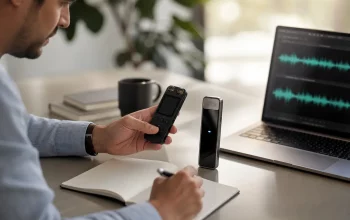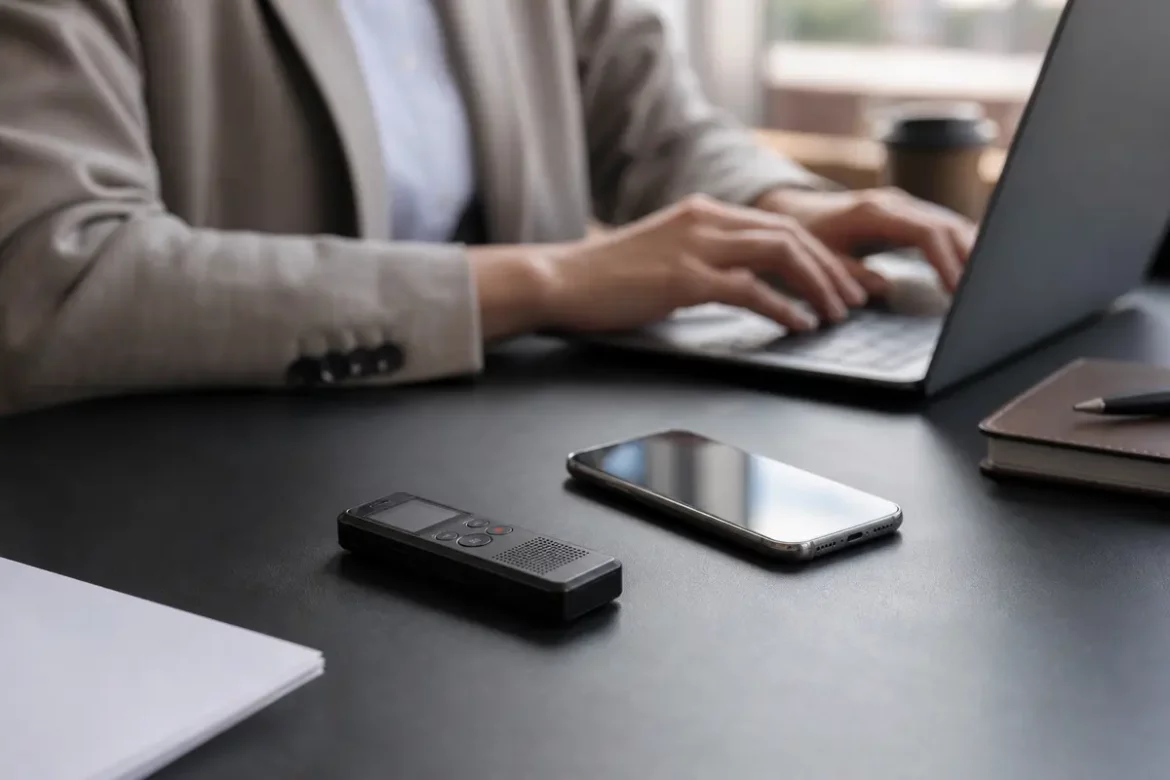
Choosing between a voice recorder vs smartphone is not just a matter of convenience. If you regularly record meetings, interviews, lectures, or other lawful conversations with consent, the right device can save time, improve audio quality, and reduce missed moments. The best option depends on where you record, how long you need to capture audio, and how much reliability matters to you.
At a glance, smartphones are convenient because they are already in your pocket and can handle recording, transcription, sharing, and editing in one place. Dedicated digital voice recorders, on the other hand, are built for one job: capturing clear audio with fewer distractions. For many users, that focus makes them the better tool.
Voice Recorder vs Smartphone: The Core Difference
The biggest difference is purpose. A smartphone is a multipurpose device. A digital voice recorder is a specialized one. That single difference affects nearly every factor, including microphone performance, battery life, file management, and ease of use.
If you need something quick for a short, consent-based conversation, a phone can work well. If you need dependable recording for long sessions or professional use, a dedicated recorder usually has the advantage.
Microphone Quality
Microphone quality is often the most important factor in the voice recorder vs smartphone comparison. Many modern phones have decent microphones, especially for close-range speech. They are designed for calls, video, and general voice capture. However, their audio tuning is often optimized for background noise reduction rather than natural, full-range speech.
Dedicated voice recorders are built to capture spoken words clearly. They often include better stereo microphones, stronger sensitivity, and settings designed for voice. This can make a noticeable difference when recording from a distance, in a meeting room, or in a quiet interview environment.
In practical terms:
- Smartphone: Good for casual, short-range recording.
- Digital voice recorder: Better for clearer speech, longer range, and more consistent results.
Battery Reliability
Battery life matters more than many people expect. A phone battery can drop quickly if you are using other apps, notifications, Wi-Fi, Bluetooth, or location services. Even if you start with a full charge, background activity can shorten recording time.
Digital voice recorders usually offer much stronger battery reliability. They are designed to run for many hours, sometimes days, on a single charge or set of batteries. Because they have fewer active features, they waste less power and are less likely to die during a long session.
If you need to record extended conversations or multiple interviews in one day, a dedicated recorder is often the safer choice.
Interruptions and Distractions
Interruptions are one of the biggest weaknesses of smartphones. Incoming calls, text messages, app alerts, and system updates can interrupt recording or distract you while you are trying to focus on the conversation. Even when notifications do not stop recording, they can create risk and inconvenience.
Voice recorders are simpler and more stable. They usually have fewer alerts, fewer background processes, and a more focused interface. That makes them easier to trust in situations where you need to stay present and avoid missing important details.
If you are recording lawful conversations where all participants consent, a dedicated recorder reduces the chance of accidental interruptions.
Storage and File Management
Both devices can store plenty of audio, but they handle files differently. Smartphones often save recordings in app-specific folders or cloud systems, which can be convenient if you want automatic syncing. However, app updates, storage permissions, or account settings can sometimes make file access confusing.
Most voice recorders keep files simple and easy to find. Recordings are usually stored in standard audio formats such as MP3 or WAV, which makes them easy to move, rename, and organize. Many recorders also support expandable memory cards, which can be useful if you record often.
For people who want straightforward file handling, a digital recorder usually wins. For people already working inside a cloud-based workflow, a smartphone may feel more seamless.
Privacy and Data Control
Privacy is a major reason many people compare a voice recorder vs smartphone. Phones often connect to apps, cloud backups, analytics tools, and account-based services. That can be helpful, but it also creates more points where your recordings may be synced, copied, or shared.
Dedicated recorders are usually simpler. They can often operate offline, without accounts or cloud services. That gives users more direct control over where recordings are stored and how they are transferred.
For a broader look at how mobile devices can expose audio-related activity, you may also find this guide useful: mobile phone eavesdropping works short guide. It explains the topic in a simple, consent-based way and can help you understand privacy risks more clearly.
Portability and Ease of Carrying
Smartphones are the most portable option because you already carry them every day. If you need to record something unexpected, your phone is almost always available. That convenience is hard to beat.
Still, a dedicated voice recorder is usually small, lightweight, and easy to slip into a pocket or bag. While it adds one more item to carry, it often delivers better recording reliability in exchange.
So the question is not whether one is portable. Both are. The real question is whether you want one device that does everything or a separate tool designed specifically for audio capture.
File Transfer and Sharing
Smartphones make sharing fast. You can send a recording by email, messaging apps, or cloud links in seconds. That is a major advantage if you need immediate collaboration or a quick handoff after a consent-based interview or meeting.
Voice recorders usually require an extra step. You may need to connect by USB, remove a memory card, or use companion software. That is slightly less convenient, but it also gives you more deliberate control over the transfer process.
If speed matters most, the phone is easier. If controlled handling matters more, the recorder is often better.
Voice Activation
Voice activation is useful when you want a recorder to start automatically when someone speaks and pause during silence. This helps reduce empty audio, saves storage, and makes long recordings easier to review.
Many dedicated voice recorders offer this feature with good reliability. Some smartphones also include voice-triggered options through third-party apps, but results can vary depending on the app, operating system, and battery settings.
For dependable voice activation, a dedicated recorder generally performs better. It is usually designed with this feature in mind, rather than treating it as an add-on.
Transcription
Transcription is one of the areas where smartphones have an edge. Many phone apps can automatically convert speech to text, organize notes, and integrate with productivity tools. That is convenient for students, journalists, professionals, and anyone who wants searchable records.
However, transcription quality depends on audio clarity. A better recording usually produces a better transcript. That means a voice recorder can indirectly improve transcription results by capturing cleaner speech.
In short, smartphones often offer better built-in transcription tools, but voice recorders often provide better raw audio for transcription accuracy.
Overall Value
The best value depends on your needs. If you want one device for calls, notes, photos, email, and recording, your smartphone offers strong value because it already does so much. If you need reliable, high-quality audio for repeated use, a dedicated voice recorder often gives better performance for the price.
Here is the simplest way to think about it:
- Choose a smartphone if convenience, quick sharing, and transcription matter most.
- Choose a digital voice recorder if audio quality, battery life, privacy, and uninterrupted recording matter most.
Which Is Better for Recording Conversations?
For most serious recording needs, a digital voice recorder is the better choice in the voice recorder vs smartphone comparison. It is more focused, more reliable, and usually better at producing clear speech over long periods. That makes it ideal for meetings, interviews, lectures, and other consent-based conversations.
A smartphone still makes sense when you need speed, portability, and easy sharing. It is also a strong option if transcription is a top priority and the recording situation is simple.
The best approach is to match the device to the task. If you record often, need dependable audio, and want fewer distractions, buy a dedicated recorder. If you record occasionally and value convenience above all else, your smartphone may be enough.
Final Takeaway
When comparing a voice recorder vs smartphone, the winner depends on your goals. Smartphones are flexible and easy to use. Digital voice recorders are more specialized and usually more dependable. For lawful, consent-based conversations, both can be effective, but the recorder is generally the stronger tool for audio quality and reliability.
If your priority is to capture clear speech with minimal risk of interruptions, a digital voice recorder is the better investment. If your priority is simplicity and all-in-one convenience, your smartphone may be the smarter everyday choice.
Frequently Asked Questions
Is a voice recorder better than a smartphone for interviews?
Usually yes, especially if you want more reliable audio, longer battery life, and fewer interruptions during a consent-based interview.
Can a smartphone replace a digital voice recorder?
For casual recording, often yes. For longer sessions or higher reliability, a dedicated voice recorder is usually better.
Which device is better for transcription?
Smartphones often have better built-in transcription apps, but a voice recorder may produce clearer audio that improves transcript accuracy.
Are voice recorders more private than phones?
Often yes. Many voice recorders work offline and do not rely on cloud services, accounts, or app ecosystems.
What should I choose for long meetings?
A digital voice recorder is typically the safer choice because of stronger battery life, better focus, and fewer distractions.