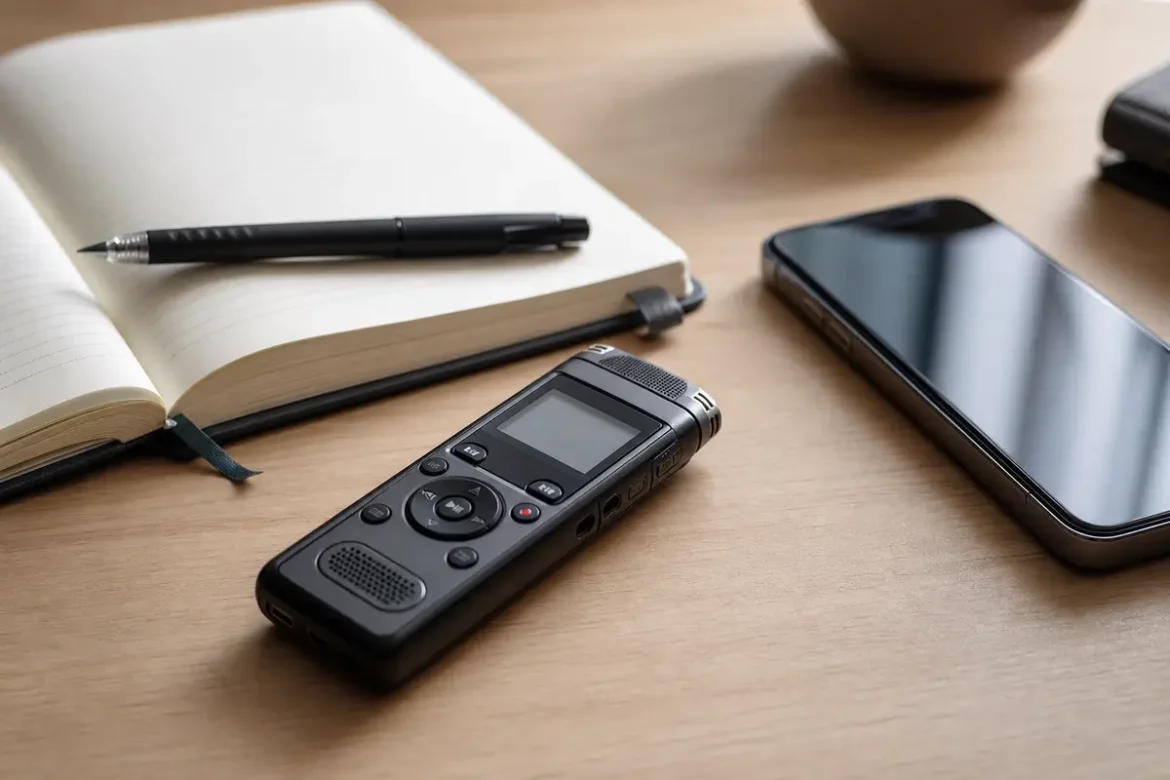
If you are looking for the best voice recorder for interviews, the right choice depends on more than just price or brand. The ideal recorder should capture speech clearly, handle different interview settings, and give you reliable files that are easy to edit and store. Whether you are recording a one-on-one conversation, a panel discussion, an outdoor interview, or a phone call, the right features make a major difference in audio quality and workflow.
This buyer’s guide breaks down what matters most when comparing interview recorders. You will learn how microphone patterns affect sound pickup, when external microphones help, which audio formats are easiest to work with, how monitoring improves results, and why battery life and consent should never be overlooked.
What Makes the Best Voice Recorder for Interviews?
The best recorder for interviews is the one that fits your recording environment and your workflow. A great device should do four things well: capture speech clearly, reduce background noise, offer simple controls, and produce dependable files. If you are interviewing people often, you also want a recorder that is easy to carry, quick to start, and stable enough to trust in the field.
For most users, the best voice recorder for interviews will include:
- Clear built-in microphones with good speech focus
- Support for external microphones
- Common audio formats such as WAV and MP3
- Headphone monitoring
- Long battery life or rechargeable power
- Easy file transfer to a computer or phone
Choose the Right Recorder for the Interview Type
Not every interview setup is the same. The best recorder for a quiet office is not always the best choice for a busy conference floor or a phone interview. Match the device to the way you work.
One-to-One Interviews
For one-to-one interviews, clarity and natural voice tone matter most. A compact handheld recorder with a sensitive stereo or mono microphone can work well if the speaker stays close to the device. If you want more control, choose a recorder with an external mic input so you can connect a lavalier or directional microphone.
One-to-one interviews are often recorded indoors, where room echo can soften speech. A recorder that supports directional pickup is useful because it focuses more on the speaker and less on surrounding noise. If you need a guide on choosing mic directionality for different environments, this resource can help: directional microphones for all seasons.
Group Interviews and Panel Discussions
Group interviews require more coverage. A recorder with wide stereo pickup may capture the room well, but it can also pick up more noise and less direct voice detail. For better results, look for a recorder with multiple microphone patterns or the option to use an external boundary or stereo mic.
If speakers sit around a table, place the recorder in the center and use a model with good off-axis response so voices remain understandable even when people turn away. For larger groups, external microphones can make the recording more balanced than a single built-in mic.
Indoor Interviews
Indoor recording can sound excellent if the room is quiet, but reflective surfaces can create echo. A recorder with a low-noise microphone and a headphone jack is valuable here, because you can monitor the sound in real time and catch problems before the interview is over.
For office interviews, classrooms, or home studios, prioritize clean speech capture over flashy features. A simple recorder with reliable gain control often performs better than a complicated device with weak mic sensitivity.
Outdoor Interviews
Outdoor interviews are where weather, wind, and traffic become major issues. The best voice recorder for interviews in outdoor settings should support a windscreen, external microphone, or directional pickup. Built-in microphones alone may struggle with ambient noise.
Look for a recorder that performs well in windy environments, has strong preamps, and allows you to monitor levels with headphones. If you frequently record outside, rugged build quality and portable battery power also matter.
Telephone and Remote Interviews
Telephone interviews need a different approach. You may need a recorder that supports line-in recording, a phone recording adapter, or software-based capture. Some portable recorders can connect to a phone system or computer audio output, while others are better suited to face-to-face work.
For remote interviews over video calls, make sure your recorder or setup can capture a clean signal without distortion or feedback. In many cases, a recorder that supports direct digital input or line-level input will deliver cleaner results than recording audio through a speakerphone.
Microphone Patterns: Why They Matter
Microphone pattern, or polar pattern, describes how a recorder picks up sound from different directions. This is one of the most important features to compare when shopping for the best voice recorder for interviews.
- Omnidirectional: Picks up sound from all directions. Useful for group settings or room ambience, but less ideal in noisy places.
- Cardioid: Focuses on sound from the front and reduces noise from the sides and rear. A strong choice for interviews in busy environments.
- Supercardioid or hypercardioid: Offers a tighter focus than cardioid, which can help isolate speech outdoors or in louder rooms.
- Stereo: Captures a wider sound field. Useful when ambience matters, though it is not always the best choice for speech-only recording.
If your interviews happen in many different places, a recorder with switchable patterns or compatible directional microphones gives you more flexibility. This is especially useful when you need one device to handle both quiet offices and unpredictable outdoor scenes.
External Microphone Support Adds Flexibility
Built-in microphones are convenient, but external mic support can significantly improve recording quality. Many professionals prefer external microphones because they can place the mic closer to the speaker, which reduces room noise and improves clarity.
Common external microphone options include:
- Lavalier mics: Great for one-on-one interviews and mobile reporting
- Shotgun mics: Useful for focused pickup in noisy environments
- Boundary mics: Helpful for group tables and meetings
- USB or line-in solutions: Ideal for computer-based or telephone interviews
When comparing recorders, check whether the microphone input supplies plug-in power or phantom power if your mic requires it. Also confirm that the input level can be adjusted properly. A recorder with flexible input settings is easier to adapt across different interview styles.
Audio Formats: Choose Files That Fit Your Workflow
Audio format affects both quality and file size. For interview work, the most common choices are WAV and MP3.
WAV is uncompressed, which means it preserves more detail. It is the preferred choice when you want the highest quality for editing, transcription, or archiving. The downside is larger file sizes.
MP3 is compressed and easier to store and share. It works well when file size matters more than maximum fidelity, but it is less ideal if you plan to edit heavily later.
Some recorders also support formats like FLAC or AAC. If you regularly publish content, a device that lets you record WAV and export MP3 gives you both quality and convenience. For the best voice recorder for interviews, WAV support is usually a must-have.
Monitoring: Hear Problems Before They Ruin the Recording
Headphone monitoring is one of the simplest ways to protect your interview audio. When you listen during recording, you can spot clipping, low volume, cable problems, background hum, or microphone handling noise right away.
A recorder with a headphone jack and real-time monitoring lets you react before the interview ends. This is especially important for live reporting, outdoor work, and any situation where you cannot easily repeat the conversation. If your recorder also has a clear level meter, you can set better input gain and avoid distortion.
For best results, test your setup a few minutes before the interview starts. Speak at the same volume you will use during the conversation and confirm that peaks stay in a safe range.
Battery Life and Power Options
Long battery life is essential if you conduct back-to-back interviews or travel frequently. A recorder that dies in the middle of an important quote can waste time and create stress.
When comparing devices, look at:
- Rated battery life in real recording mode
- Whether the recorder uses replaceable batteries or rechargeables
- USB charging support
- Ability to run while connected to external power
Replaceable batteries are useful in the field because you can swap them quickly. Rechargeable models are convenient for everyday use and can save money over time. If you often record long sessions, choose a recorder with a strong battery reputation rather than trusting the highest number on the spec sheet alone.
Consent and Legal Considerations
Good audio quality is only part of professional interview recording. You also need to respect consent laws and ethical standards. Recording rules vary by country, state, and situation, so always check the requirements before you begin.
As a best practice, tell the interviewee that you are recording and explain how the recording will be used. For sensitive interviews, it is smart to confirm consent verbally at the start and keep that confirmation on the recording. If you are working in journalism, research, or client interviews, clear consent protects everyone involved.
It is also wise to label files clearly, store them securely, and back them up after each session. Reliable record-keeping is part of a professional interview workflow.
How to Compare Your Options Before Buying
Before choosing the best voice recorder for interviews, compare the devices based on your most common use case. Ask yourself where you record most often, how many people you interview at once, and whether you need built-in portability or expandable microphone options.
Use this quick checklist:
- Does it match your interview environment?
- Does it support external microphones?
- Does it record in WAV?
- Can you monitor with headphones?
- Will the battery last through your typical session?
- Is it easy to use under pressure?
- Does it fit your consent and compliance process?
If you answer yes to most of these questions, you are likely close to the right choice.
Final Verdict
The best voice recorder for interviews is the one that gives you clean speech, dependable operation, and enough flexibility for different settings. For one-on-one sessions, a simple recorder with good mic quality may be enough. For group discussions, outdoor work, or telephone interviews, you may need external microphone support, better mic patterns, and stronger monitoring tools.
Focus on practical features first: microphone pattern, external input options, audio format, headphone monitoring, battery life, and consent handling. When you choose a recorder that matches your real interview needs, you save time, reduce editing problems, and capture better conversations from the start.
FAQ
What is the best voice recorder for interviews?
The best voice recorder for interviews is one that matches your setting, offers clear speech capture, supports external microphones, and records in high-quality formats like WAV.
Should I choose WAV or MP3 for interviews?
WAV is better for quality and editing, while MP3 is smaller and easier to share. For most professional interview work, WAV is the stronger choice.
Do I need an external microphone for interviews?
Not always, but an external microphone often improves clarity, especially in noisy rooms, outdoor locations, and group interviews.
Why is headphone monitoring important?
Monitoring lets you hear issues like clipping, background noise, or cable problems while you are still recording, so you can fix them immediately.
Is it legal to record an interview without consent?
Consent laws vary by location. Always check local rules and clearly tell the interviewee that the conversation is being recorded.